Is he right?
The MOU may be less a peace deal than a test of whether there is anyone left in Tehran capable of making one.
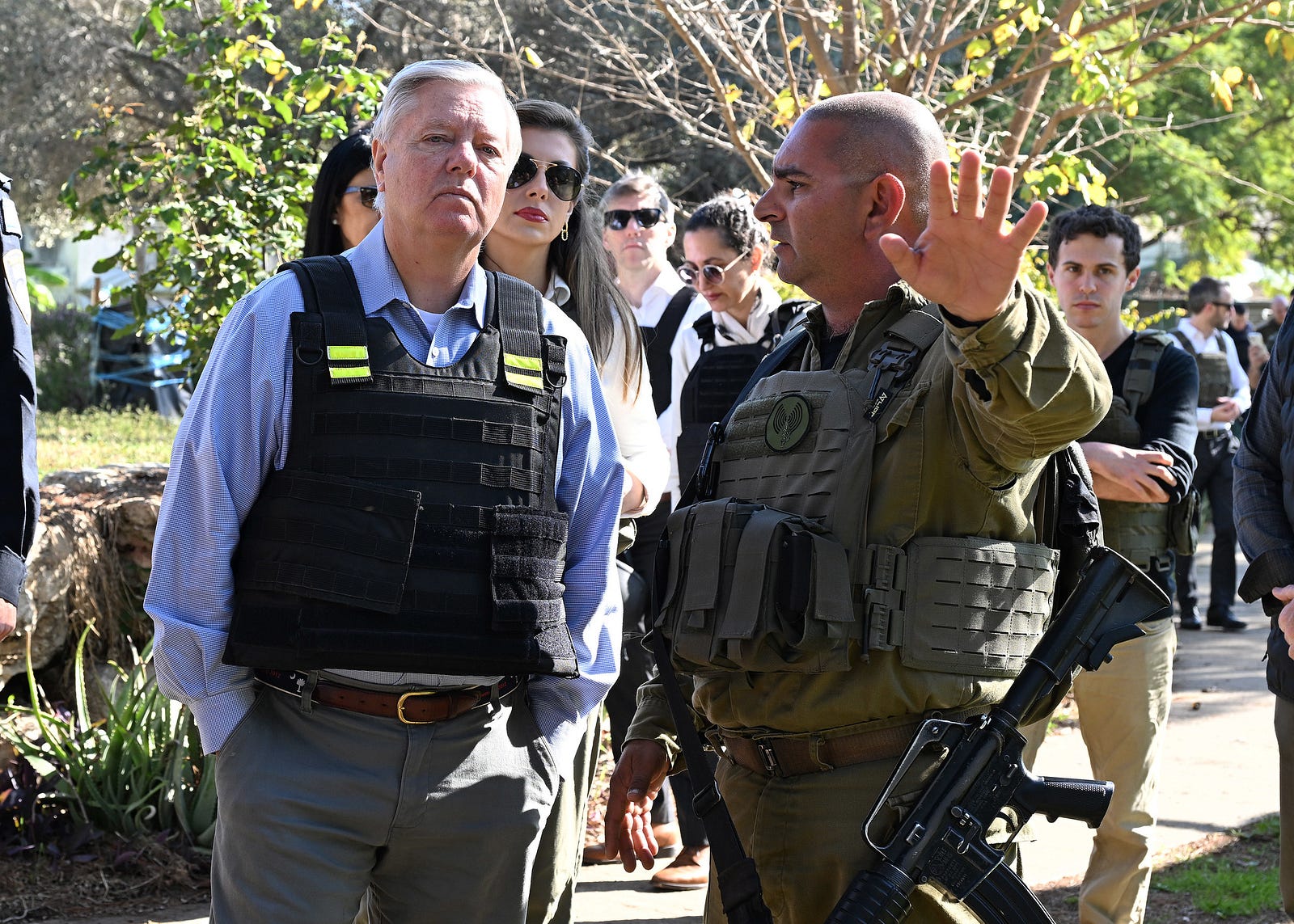
At least, that’s what Sen. Lindsey Graham believes. Far from pretending to like the Iran MOU, his argument is more complicated, and more ominous. Diplomacy, in Sen. Graham’s telling, is worth trying not because he expects it to succeed, but because the alternative is worse — and possibly coming soon.
“Let’s try a diplomatic solution,” Graham told reporters recently before adding pessimistically: “I think it’s going to fail.”
That may sound like classic Washington hedging. It is not. Graham is laying out a theory of the next phase of the Iran conflict: either the MOU boxes Iran in through diplomacy, or its failure gives the United States justification to box Iran in by force.
He may be right.
The first problem is obvious. Iran’s public position already appears to conflict with the American understanding of the deal. President Trump says Iran has agreed to indefinite nuclear inspections. Iranian officials deny that such talks have even begun in the way Washington describes. The United States says Iranian funds will be controlled and directed toward humanitarian purposes. Tehran says something else. The Strait of Hormuz is open, but its long-term status is unresolved.
That is not how durable peace agreements usually begin.
But the deeper problem is not the language of the MOU. It is the condition of the Iranian regime itself. Graham’s remarks point to a possibility many officials may prefer not to say out loud: the United States may be negotiating with a government that no longer has clear internal authority.
For decades, Iran’s system rested on a cult of religious authority centered around Ayatollah Ali Khamenei. Institutions existed, elections occurred, factions competed, and the military had its own power centers. But the regime’s ultimate source of legitimacy flowed through the supreme leader. If that structure has been decapitated or badly weakened, the problem changes. It is no longer simply a question of whether Iran wants to make a deal. It is whether anyone in Iran can enforce one.
Who can bind the IRGC? Who can restrain Hezbollah? Who can guarantee the Strait of Hormuz remains open? Who can accept inspections, dilute uranium, control missiles, and sell humiliation to a revolutionary system built on defiance?
The United States and Israel may have been victims of their own success. Early strikes that killed senior officials and degraded command structures may have made Iran weaker, but also less governable. A weakened regime can be dangerous in a different way than a strong one. It may lack the confidence to compromise and the coherence to comply.
That is the logic behind Graham’s threat to take control of Hormuz if diplomacy fails. It is not merely bluster. It is a warning that Washington may no longer believe Iranian promises about the strait are worth much. If Tehran cannot keep Hormuz open, or if various Iranian power centers use mines, tolls, registration schemes, or proxy threats to extort global shipping, then the United States may conclude that direct control is the only reliable solution.
That would be a dramatic escalation. Running Hormuz is not the same as reopening it. Clearing mines, escorting tankers, destroying coastal batteries, and administering passage are different military and legal tasks. Graham’s talk of charging a fee creates its own complications, especially since the United States has objected to Iranian tolling as illegitimate. Still, the strategic direction is clear: if Iran uses Hormuz as leverage, Graham believes Trump will remove that leverage.
His Hezbollah comments are just as significant. Graham is proposing a new doctrine: if Iran uses Hezbollah to attack Israel, the United States will hit Iran. That would end the fiction of proxy deniability. For years, Tehran has used regional militias to wage war while avoiding full responsibility. Graham is saying that era may be over.
For Israel, a long-term, trusted U.S. ally, that shift is not a footnote. Israel’s central objective is not just a signed nuclear document. It is the end of Iran-sponsored proxy terrorism. A deal that leaves Hezbollah intact, armed, and ready to resume attacks would not solve Israel’s problem. It would pause it.
That is where the regime-change question returns. Can the Islamic Republic abandon the proxy network without ceasing to be the Islamic Republic? Hezbollah, the Houthis, and other Iranian-backed groups are not side projects. They are part of the regime’s identity and regional strategy. Asking Tehran to permanently stop using proxies against Israel may be asking the regime to stop being itself.
Graham is also linking the Iran file to a broader regional transformation: Saudi Arabia joining the Abraham Accords. That is the optimistic side of his argument. If Iran is contained, weakened, or forced into retreat, then Israel and the Sunni Arab world may have room to move toward normalization. But that, too, depends on Iran being “in a box,” as Graham put it.
The question is whether the box can be built through paper or only through power.
Diplomacy could still work, but only under narrow conditions. Iran would need a leadership structure capable of making concessions. Its military and proxy networks would need to obey. Its negotiators would need to speak with actual authority. The United States would need to verify every key promise. Israel would need to see real security gains, not temporary language.
That is a lot to ask of a regime under pressure, internally fractured, and ideologically committed to resistance.
So is Graham right? Probably. Not because diplomacy is always foolish, and not because every agreement with an enemy is appeasement. Diplomacy is often necessary. But diplomacy requires a counterpart with both incentive and authority. Iran may have the first and lack the second.
The MOU may therefore become less a peace deal than a test. If Iran complies, Trump can claim diplomacy boxed Tehran in. If Iran cheats, fractures, or loses control of its own proxies, Graham has already described what comes next.
Either way, his message is unmistakable: the old Iran policy is ending. The only question is whether Tehran signs its way into the box — or gets forced into it.
(Contributing writer, Brooke Bell)